Virtual Gifting and NFT (Non Fungible Tokens): Similar or Different

Ratnam31 Aug, 2021


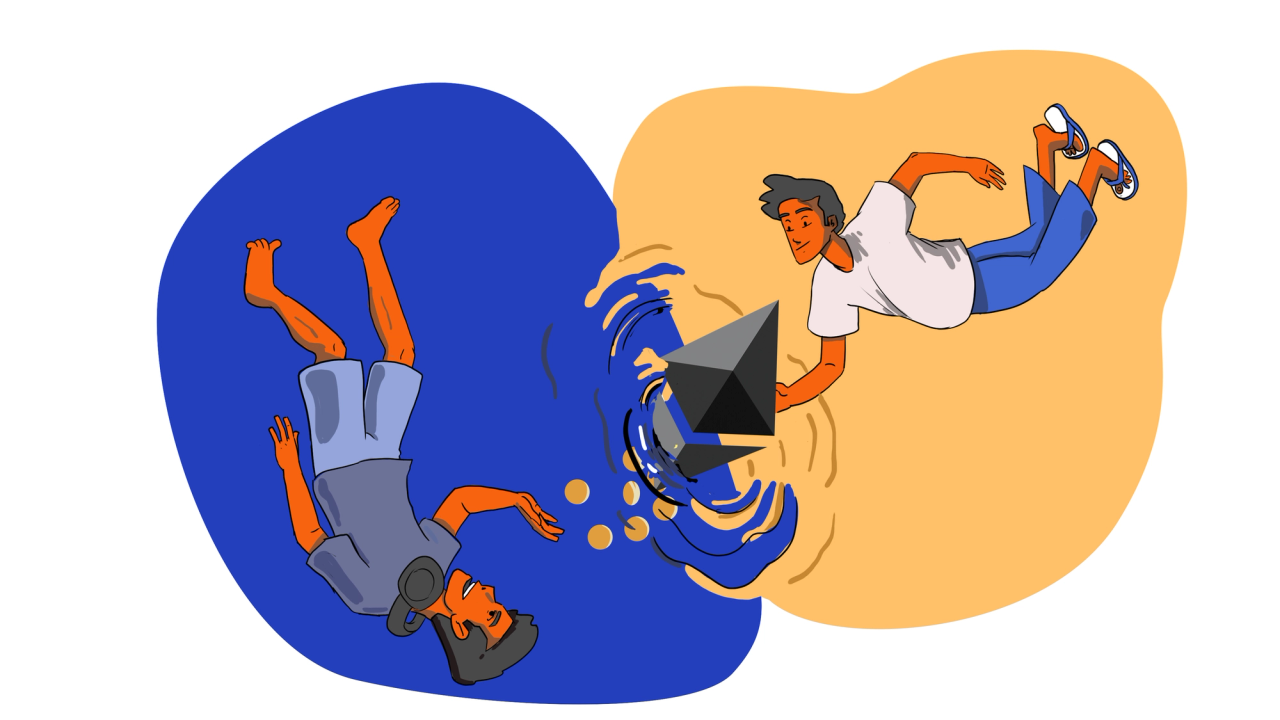
Shah Jahan building the Taj Mahal for Mumtaz Mahal is an example of immortal love. But fans sending paid digital icons of Taj Mahal is an instance of appreciation for the content Creators they admire. Before you get confused between these two examples, let me tell you we are talking about the currently raging trend of Virtual Gifting on social media apps built for content creation. It is a monetisation model which is driven by fans’ need for garnering personal recognition from their favourite content streamers.
From an online gamer to a content Creator, these online Streamers have a certain number of followers out of which some are more often inclined to get closer to their Creator than other followers. Virtual Gifting allows these creators to monetise this portion of their loyal fans and their admiration for them. A fan who wants to personally acknowledge the talent of their creator can buy virtual gifts that are often available in the form of digital commodities like coins, stars and icons. A user can pay to get these tokens and send them to their favorite creators online as virtual gifts when they are enjoying their content. These users get priority and special attention as compared to other fans who do not opt to buy and send virtual gifts.
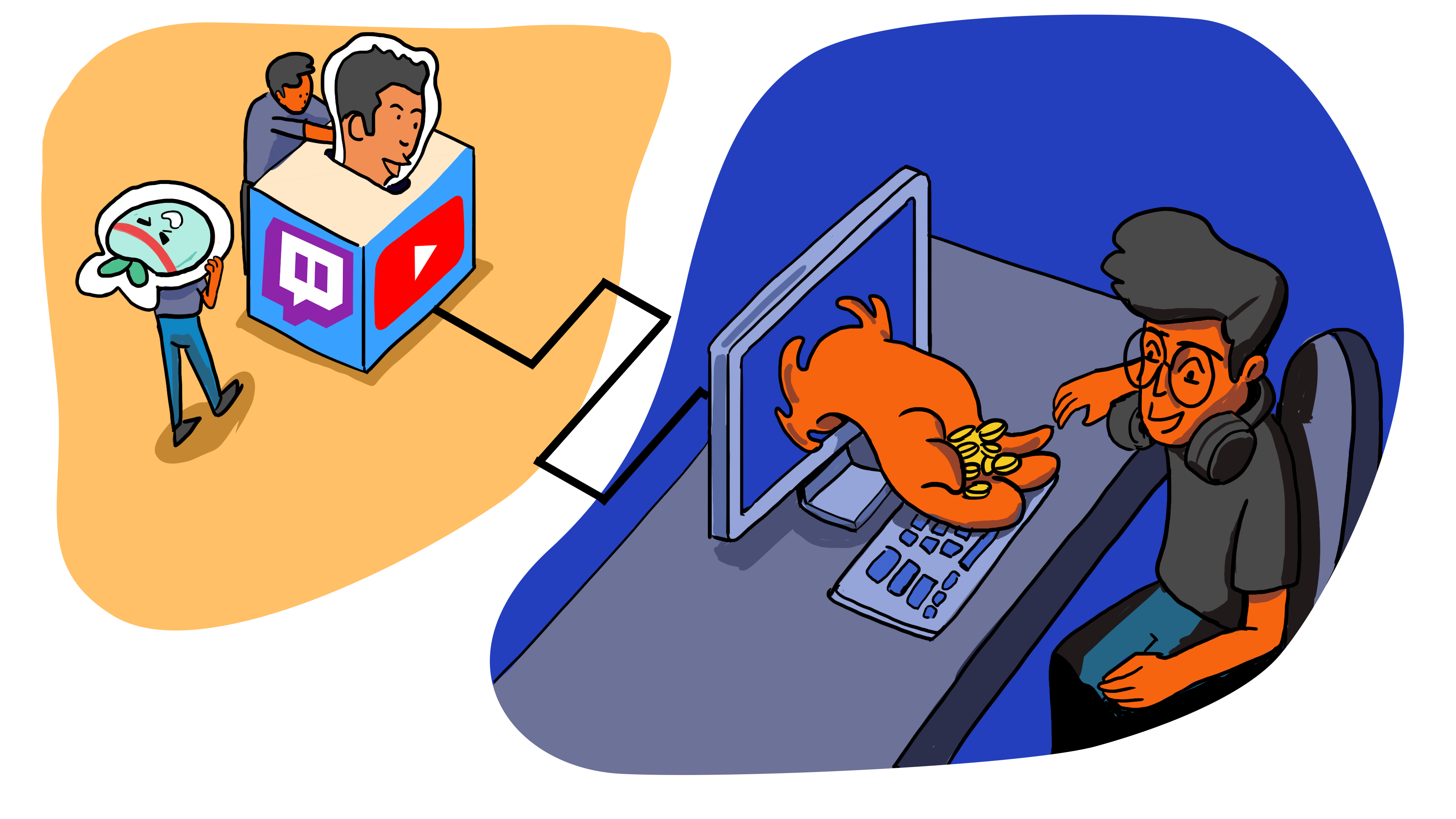
Some examples of applications monetising from virtual gifting are YouTube’s Super Chat and Twitch (now owned by Amazon), a live-streaming video game platform. YT’s Super Chat is a part of its Partner Program in which viewers can purchase distinct chat messages to appear at the top of the content feed with a pinned comment.
China currently has a live-streaming industry worth $5-billion, which majorly depends on the monetization of the virtual gifting model. According to a report published on The Washington Post, a top live-streaming creator’s earnings through Virtual Gifting in China can go as high as $100,000 a month. India has been a bit new as the monetisation model for creators has paced up only since 2018. But the immense variety of content available here has been proving to be highly successful for the Virtual Gifting model.
The ever-growing success rate only confirms that Indian streamers and users are ready to do anything to take up the web space even if it means having to pay for getting early access and special attention from their creators. If the viral reports are to be believed, skills like singing, dancing and Bollywood content videos are among the top content genres to get the maximum number of virtual gifts on a daily basis.
A couple of years ago, when creating content on social media was just gaining popularity and becoming another medium of earning money, views and footfalls were significant parameters. But now with adblocks and changing monetisation policies of social media giants have made earning money simply from views and ads difficult. Virtual gifting has emerged as a golden opportunity for the content community to encash their skills on their channels. But is this a sustainable solution? For how long will people find it interesting to support creators through virtual gifting models? Let’s come back to this after discussing NFTs, another raging investment tool that seems to be going popular at an exploding rate in 2021.
NFT stands for Non Fungible Token. Crypto currency like bitcoin can be termed as fungible tokens as they are easily exchangeable for one another and they always have equal value. NFTs and bitcoins are built using the same kind of programming but they don’t have any other similarity. An NFT is a digital non-fungible asset representing real-world objects like physical or digital art, music, memes, performances, videos and so on. You can buy and sell them online, they are generally encoded with the same software as many cryptos.
Non Fungible Tokens are generally unique, or at least one of a very limited kind and they have unique identifying codes. As per Arry Yu, chair of the Washington Technology Industry Association Cascadia Blockchain Council “Essentially, NFTs create digital scarcity,”.
This quality makes NFTs uniquely different from any other digital assets which can always be duplicated and exchanged multiple times. Any art work or content created by online Streamers can be represented by NFTs. For example, a content creator can sell the original memes in the form of NFTs to an interested fan enabling them to own the very original file. These memes might be available for free on the internet to access by anyone, but the unique ownership comes from being the exclusive owner of the original work.
Even content pieces like tweets can come under Non Fungible Tokens. Twitter co-founder Jack Dorsey sold his first ever tweet as an NFT for more than $2.9 million. NFTs are like any other physical collector’s items, but only digital. Any form of art, GIFs, videos, sports highlights, video games, music etc. can all be made available in the form of NFTs. Nyan Cat, a 2011-era GIF of a cat having a pop-tart body, was sold for almost $600,000 in February.
The buyer of NFTs gets the exclusive ownership rights. NFTs can only be owned by one owner at a time. NFTs’ unique data makes it easy to verify their ownership and transfer tokens between owners. Specific information can also be stored inside them by the creator. Deemed as a good source of investment, NFTs are gaining popularity at a rocket speed. They are also serving a majority of content Streamers and artists as a benefitting monetisation model. A whopping $174 million has been spent on NFTs since November 2017.
Widely popular digital artist Mike Winklemann, also known as Beeple created a composite of 5,000 daily drawings to create probably the most famous NFT so far. Named as EVERYDAYS: The First 5000 Days, one of its kind NFT was sold at NFT marketplace Christie’s for a record-breaking amount of $69.3 million. As an NFT allows the buyer to own the original item, it also contains built-in authentication, a proof of distinctive ownership. Buyers can bask in the glory of boastful original digital rights which feels even more valuable than the item itself.
The introduction of NFTs empowers the artists and content Creators to monetize their skills and work. With Non Fungible Tokens, an artist or a creator can sell their work directly to the consumers as an NFT which earns them more money and they can also program in the royalties so that they always earn a part of the sales whenever their work is sold to a new owner. This is a game-changer for Streamers and artists who do not earn anything once their work or art is sold to one party.
NFTs are not necessarily limited to art or talent-based work. There is a lot of scope to be inventive. Big brands like Taco Bell recently auctioned off themed NFT art to raise funds for charity. While Charmin termed its offering NFTP (non-fungible toilet paper), Taco Bell’s NFT art was sold out in a matter of minutes, with the highest bids at $3,723.83.
Is it Wise to Invest in NFTs?
NFTs bring a lot of convenience and monetary profit to artists and content creators who, earlier, used to expect very little or nothing to earn online. NFTs replace their total dependence on offline methods like auctions, galleries and full-time jobs. So, the real question arises now, as they come with so many attractive aspects, is it really worth investing in NFTs?
If you listen to the industry experts, they wouldn’t want to lay their trust completely on NFTs and their performance. As they are brand new in the market, there is no history or statistics to judge their profitability for coming future either. While an NFT might bring you double fold profits, you might not be able to resell one at all in future. In this case, investing small amounts at the moment might be wiser than to put all your eggs in one basket.
Another aspect worth mentioning about NFTs is that they are more of a personal collectible. It might totally depend from person to person what amount they are willing to spare on something that gives them a satisfying sense of ownership. In turn, it also depends on the buyers what amount they think is worth to spend on while buying them from an existing owner. So many celebs like Lindsay Lohan and Snoop Dogg are also joining the NFT bandwagon, reproducing precious memories and art pieces as NFTs for billions of dollars to their die hard fans who can afford them.
Coming back to Virtual Gifting, this monetisation model of NFTs looks impressively promising given the fact that India is the 2nd largest internet economy in the world, with 10M Creators so far and likely to have as many as 100M Creators in the next few years.
The creator economy has boomed and it is just the beginning. With Indian platforms like Sharechat, BoloIndya and Nojoto, virtual gifting can be afforded for as minimum of 5-10 INR which can go as high as to several thousand rupees. Instant appreciation from your followers motivates the Creators to create more powerful content for their fans who are likely to send them virtual gifts for their content.
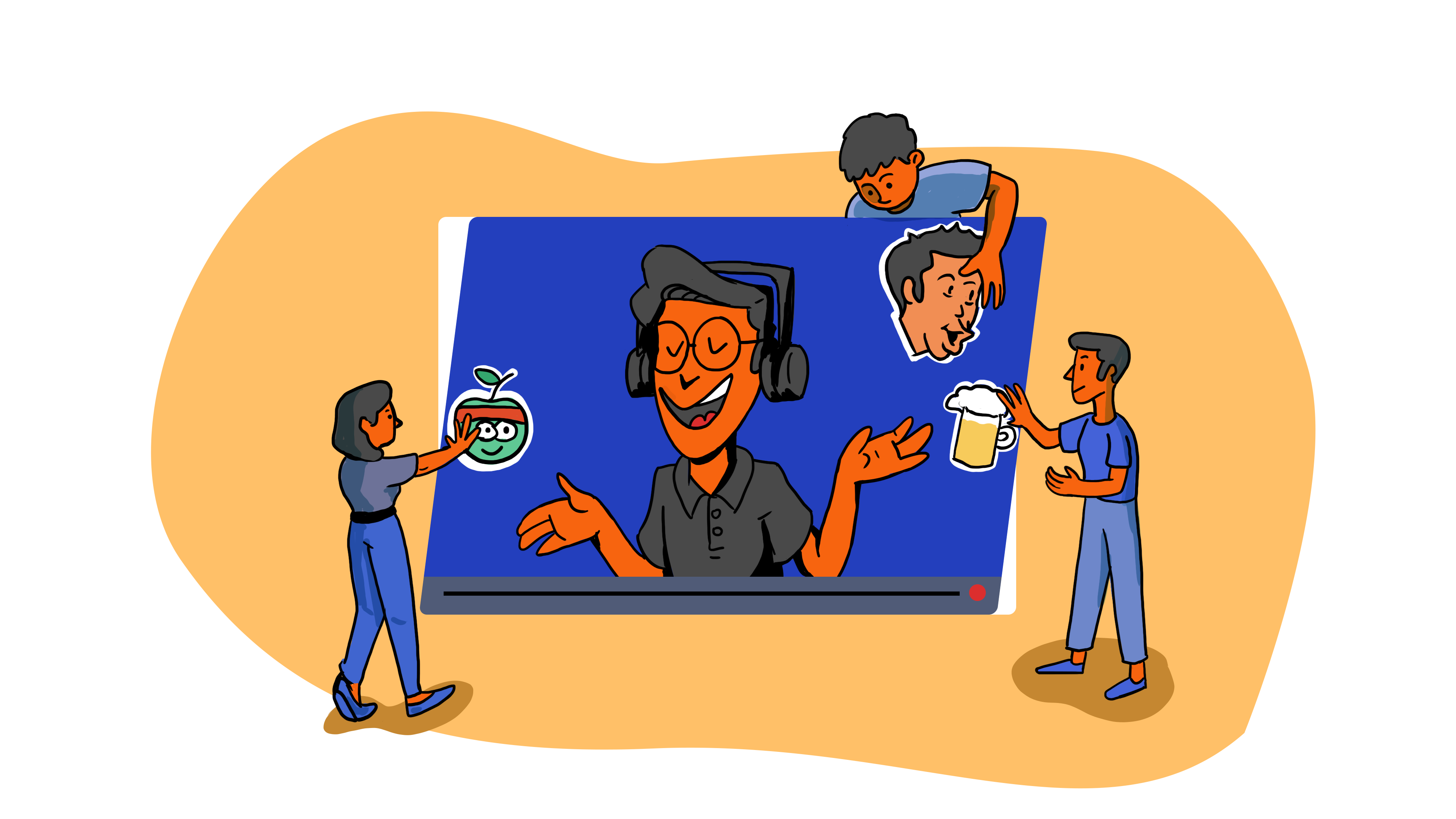
India has seen a constant growth in content creation and Creators for the last decades. And the trend of converting one’s skill into a public content platform to engage with as many viewers and fans as possible does not seem to die down any time soon. On the contrary, during this covid crisis when people were losing jobs and suffering from pay cuts, many more platforms came forward and introduced virtual gifting enabling their creators to earn more stably. In addition to monetary benefits, what drives the content Creators and platforms to do better by the day are the factors like closer association, relatability with popular personalities and the emotional bonds. These factors are less likely to lose their influence ever.
The percentage of increase in creator income on indeginous platforms presents a very optimistic future. With the new feature of virtual gifting, Bolo Indya expects its creator income to grow by 300% by December 2021. In the global content market, there are 50M creators out of which 2M earn more than 1M USD.
The bond between a creator and their fans is a two way street. While fans can send the money as a token of genuine appreciation to the Creators, they can also emerge as top loyal fans on the platform to win special favors, gestures and sometimes even physical gift hampers and goodies. The very early content creators today on popular platforms have now come a long way and are earning huge amounts of money and fame on many other platforms. Some of them have even bagged esteemed roles with renowned content organisations and the TV world. It promises only a brighter future for content Creators and platforms with new monetisation models like virtual gifting.